You Can Look Lean and Still Be at Risk. Here's the Fat You Can't See.

Hi friend,
You check the mirror. You step on the scale. The number looks fine. The waistline looks reasonable. By every visual measure, you're not carrying excess weight — and yet something still feels off. Energy is lower than it should be. Inflammation markers creep up at your annual checkup. Your doctor frowns at your fasting glucose even though you "eat pretty clean."
The problem might not be what you can see. It might be what's hiding between your organs.
We came across a post from @siimland recently that cut through a lot of the noise on this topic. The point was simple and important: you can be lean and still carry dangerous visceral fat. The kind that wraps around your liver, kidneys, and intestines. The kind that doesn't show up in the mirror. The kind that quietly drives metabolic disease, cardiovascular risk, and systemic inflammation — regardless of what the scale says.
We've seen this play out closer to home than we expected. After years of focusing on output metrics — performance, recovery, how we looked and felt — it took a deeper look at actual metabolic data to realize how much visceral fat can accumulate even in people who are active and not overtly overweight. The experience shifted how we think about body composition entirely.
If you have been measuring health by the mirror, this is the part that deserves your attention.
What Visceral Fat Actually Is
Most people think of fat as the stuff you can grab. The layer under the skin — love handles, belly softness, visible padding. That is subcutaneous fat. It's metabolically active, but relatively benign compared to the other kind.
Visceral fat is different. It sits inside your abdominal cavity, packed around your organs. You cannot see it from the outside. You cannot feel it directly. But it is metabolically aggressive in ways that subcutaneous fat is not.
Visceral fat releases inflammatory signals directly into your portal circulation — the blood supply that feeds your liver. It secretes cytokines that interfere with insulin signaling. It contributes to a chronic low-grade inflammatory state that creates compounding health risks over time.
The key distinction: subcutaneous fat is storage. Visceral fat behaves more like an active gland.
Why Thin People Are Not Off the Hook
This is the part most people miss. You do not have to be overweight to carry dangerous levels of visceral fat. Researchers have identified a phenotype called TOFI — thin outside, fat inside — in which individuals with normal BMI and low subcutaneous fat accumulate visceral fat at levels that elevate metabolic risk significantly.
How does this happen? The body has a threshold for subcutaneous fat storage. When that capacity fills, excess fat gets routed elsewhere — into the organs themselves (ectopic fat) and into the visceral compartment. People who are genetically predisposed to lower subcutaneous fat capacity hit this threshold sooner.
This means a person who never gets "fat" by appearance can still hit dangerous visceral fat levels while their peers with higher subcutaneous capacity are still showing the excess in more visible ways.
It also means BMI and the mirror are genuinely inadequate tools for assessing this risk.
How to Know If You Have It
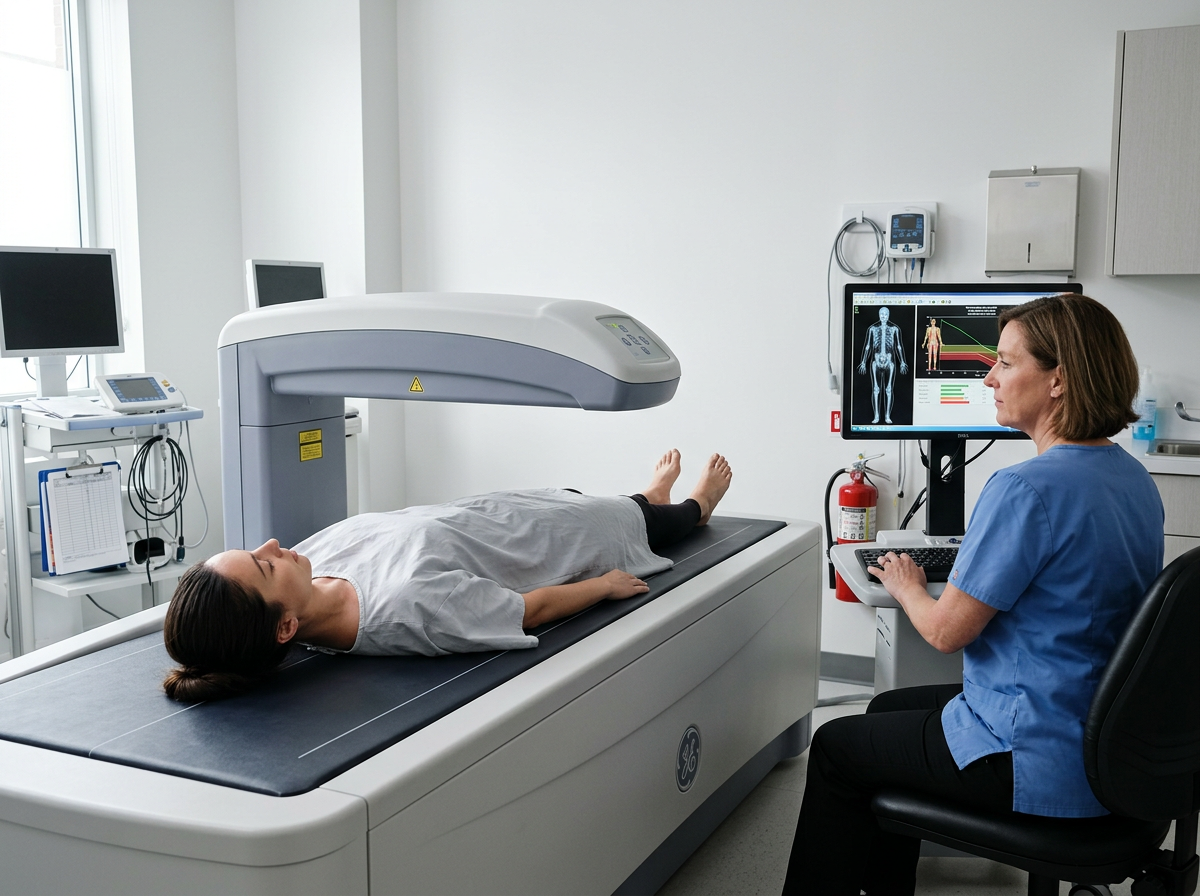
Standard body weight measurements do not distinguish between fat types or locations. A DEXA scan is the most accessible option that provides real data — it gives segmental body composition including estimated trunk visceral fat. Some high-end body composition scales use bioelectrical impedance to estimate visceral fat levels, though these are less precise.
Waist circumference and waist-to-height ratio are imperfect but meaningful proxies. A waist-to-height ratio above 0.5 — meaning your waist is more than half your height — is a reliable indicator of elevated visceral fat risk across most populations.
Blood markers tell an indirect story. Elevated fasting insulin, fasting glucose trending toward the high end of normal, elevated triglycerides, or a high triglyceride-to-HDL ratio all correlate with visceral fat accumulation. If your bloodwork shows these patterns alongside a "healthy" weight, visceral fat is worth investigating.
Why It Matters: The Metabolic Cascade
Visceral fat is not a passive passenger. It actively disrupts metabolic function in several intersecting ways:
- Insulin resistance: Visceral fat-derived cytokines interfere directly with insulin signaling in liver and muscle tissue.
- Dyslipidemia: It drives elevated triglycerides and contributes to small, dense LDL particles — the type most associated with cardiovascular risk.
- Inflammation: Visceral fat releases interleukin-6, TNF-alpha, and other inflammatory markers continuously. This is chronic, systemic, and cumulative.
- Hormonal disruption: In men, visceral fat converts testosterone to estrogen via aromatase activity, contributing to fatigue and reduced muscle-building capacity.
- Liver stress: Fatty infiltration of the liver (NAFLD) is closely linked to visceral fat levels and occurs even in people with no alcohol use and clean diets.
The problem compounds over time. More visceral fat drives more insulin resistance; more insulin resistance drives more fat storage in the visceral compartment. The loop tightens quietly while the mirror looks the same.

What Drives Visceral Fat Accumulation
Visceral fat accumulates through a specific set of inputs — and some of them will surprise you.
Poor sleep is one of the strongest drivers. Even one to two weeks of restricted sleep shifts fat storage toward the visceral compartment in otherwise healthy adults. The mechanism involves cortisol elevation and disrupted insulin sensitivity. @siimland has covered this repeatedly, and the research backs it: sleep is not optional infrastructure.
Chronic stress is equally potent. Cortisol directly promotes visceral fat deposition — it is part of the evolutionary design, parking energy reserves near organs for rapid mobilization. But chronic low-grade stress means chronically elevated cortisol, which means continuous visceral accumulation regardless of diet.
Refined carbohydrates and sugar — particularly fructose — preferentially drive liver fat and visceral fat accumulation through direct hepatic lipogenesis. This is a dietary pattern issue, not a calorie issue. Someone eating 2,000 calories with heavy refined carbohydrate load can accumulate visceral fat while someone at 2,200 calories with low refined carbohydrate intake may not.
Sedentary behavior, independent of exercise, is its own risk factor. Hours per day spent sitting correlates with visceral fat independent of whether the person also exercises.
How to Reduce It: What the Research Actually Supports
Visceral fat responds well to targeted interventions — sometimes faster than subcutaneous fat. The mechanisms are understood and the levers are actionable.
Resistance training has the strongest evidence for visceral fat reduction, even in the absence of weight loss. A consistent resistance training program changes body composition at the metabolic level. The effect is meaningful within 8–12 weeks and measurable via DEXA.
Zone 2 cardio — sustained aerobic effort at a moderate intensity where you can hold a conversation — improves mitochondrial efficiency and directly targets visceral fat oxidation. Three to four sessions per week of 30–45 minutes is sufficient to produce measurable results.
Sleep extension and quality matter more than most people realize. Improving sleep from six to eight hours per night has been shown to reduce visceral fat accumulation over time. The effect works through cortisol normalization and improved insulin sensitivity.
Dietary carbohydrate quality over quantity is a cleaner intervention than aggressive caloric restriction. Replacing processed carbohydrates with whole food sources — without necessarily cutting total intake — consistently improves visceral fat markers.
Red light therapy has emerging evidence in the context of metabolic health. Photobiomodulation at red and near-infrared wavelengths appears to support mitochondrial function and reduce inflammatory markers associated with visceral fat pathology. This is not a primary intervention, but it is a legitimate adjunct in a broader metabolic strategy.
Action Steps You Can Start This Week
The goal here is to close the gap between how you look and what's actually happening inside.
- Get a DEXA scan. Many imaging centers offer this for under $100. It gives you baseline data on visceral versus subcutaneous fat distribution. Repeat in 12–16 weeks after making changes.
- Track your waist-to-height ratio. Divide your waist circumference (in inches or cm) by your height. Aim for below 0.5.
- Get fasting insulin tested alongside your standard lipid panel. Most primary care panels skip fasting insulin, but it is highly informative. Optimal range is typically below 8 µIU/mL.
- Add or prioritize resistance training. Three sessions per week focused on compound lifts produces measurable visceral fat reduction within 10–12 weeks.
- Protect sleep as a non-negotiable. Seven to nine hours, consistent bedtime, dark and cool room. The cortisol normalization this produces is one of the fastest-acting visceral fat levers available.
- Audit refined carbohydrates. You do not need a rigid diet. Replacing the highest-refined-carb items in your current eating pattern with whole food alternatives is often enough to shift the trajectory.
The mirror is a useful tool. It just does not tell the whole story, and for visceral fat, it tells almost none of it.
Start with the data. Then let the data drive the protocol.
Take care of yourself and stay upgraded,
The AXRAH Team