Is Your Bedroom Making You Weak?
Is Your Bedroom Making You Weak?
Hi friend,
Do you ever get a full eight hours of sleep but wake up feeling like you barely rested? You’re tired, your brain is foggy, and you need three cups of coffee just to feel human. You did everything right, but you still feel wrecked.
It’s one of the most frustrating feelings. You’re spending a third of your life in bed, but instead of recovering, your body is just... lying there. What if the problem isn't you, but your environment?
I used to think sleep was just a number. Eight hours was the goal. I hit it most nights, but my energy levels were a total crapshoot. Some days I felt great, others I was a zombie. It wasn't until I started treating my bedroom like a high-performance training facility that I realized sleep isn't passive. It's a skill.
If you are not waking up feeling restored, your sleep inputs are wrong.
Sleep Is a Skill You Can Learn
My friend Siim Land talks about this all the time. You can practice sleeping. Like any skill, the quality of your practice determines your results. Just showing up isn't enough. You have to control the variables. The inputs for high-quality, restorative sleep are specific and non-negotiable. It’s not just about what you do, but what your environment tells your body to do.
Anchor Your Day with Light
Your body’s master clock is set by light. Specifically, morning sunlight. As Andrew Huberman teaches, getting sunlight in your eyes as soon as possible after waking anchors your entire circadian rhythm. This isn't just a suggestion; it's a biological command.
- What to do: Go outside for 10-15 minutes within the first hour of waking. No sunglasses.
- Why it works: The specific frequency of light from the low-angle sun triggers the release of cortisol and sets a countdown timer for melatonin production later that night.
- What if it's cloudy? The critical frequencies of light still penetrate the clouds. You may just need a bit longer, maybe 20-30 minutes.
This single habit tells your brain and every cell in your body what time it is, and when to start preparing for a deep, restorative night of sleep.
Your Bedroom Must Be a Cave
Your brain is wired for survival. It interprets light, sound, and temperature as signals from the outside world. To achieve truly deep sleep, your sleep environment needs to send one signal and one signal only: "You are safe. Shut everything down." This means your room must be a cave.
- Dark: Pitch black. Not "kind of dark." I'm talking about so dark you can't see your hand in front of your face.
- Cold: Your body's core temperature needs to drop to initiate and maintain sleep. A cool room is a powerful trigger.
- Quiet: Unfamiliar or sudden noises trigger a vigilance response in the brain, pulling you out of deep sleep even if you don't fully wake up.
Light Is the Enemy of Sleep
The single biggest destroyer of sleep quality is light exposure at night. The blue and green wavelengths from screens, phones, and standard light bulbs are daytime signals. When your eyes see them, your brain thinks it's time to be awake and alert, and it shuts down melatonin production.
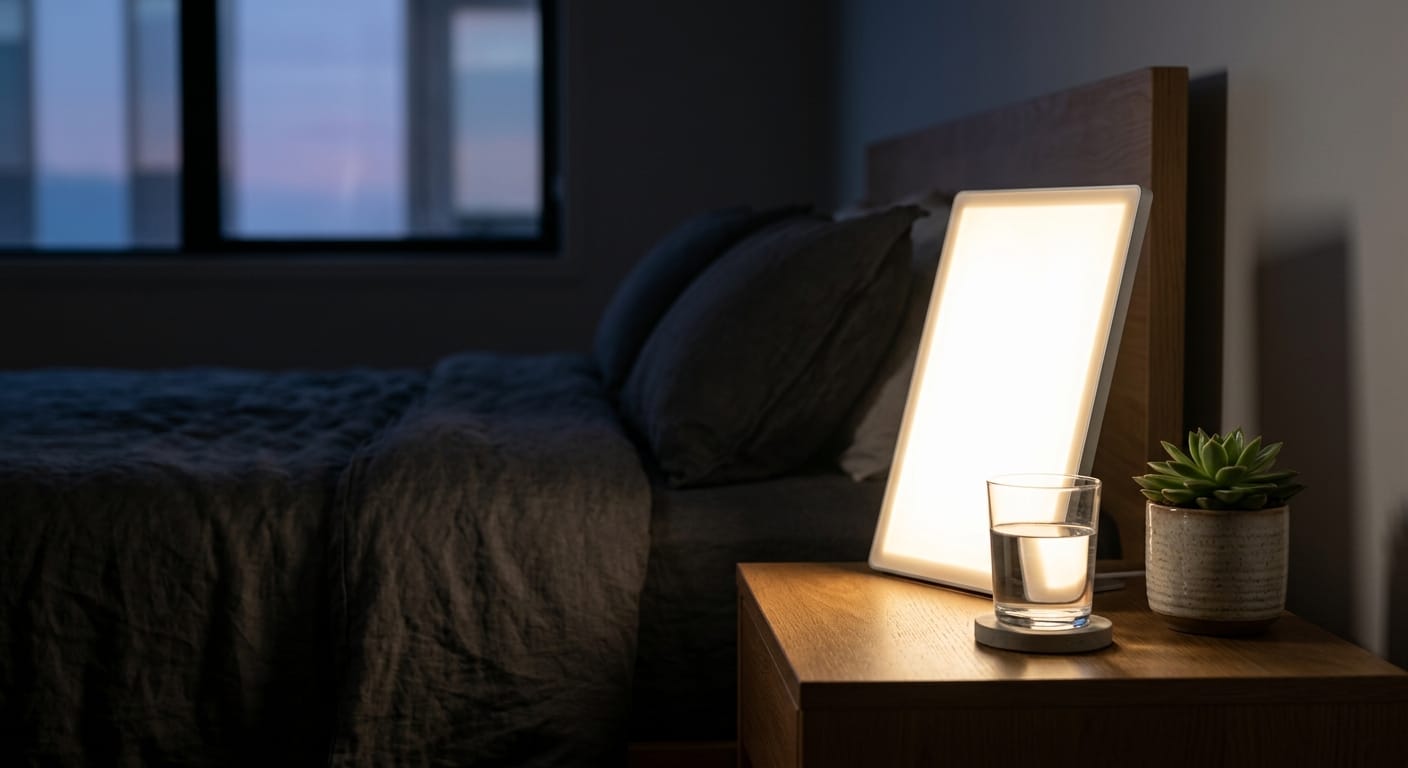
I replaced every light in my bedroom and bathroom with red light bulbs. For reading, I use my AXRAH Panel. Its pure red light provides targeted ambiance without the disruptive blue or green frequencies that sabotage your sleep hormones. It gives me enough light to read and wind down without telling my brain it's noon.
Turn Down the Temperature
A drop in core body temperature is a primary signal for sleep. You can’t fall asleep effectively if you’re too warm. Programming your body for sleep means programming your environment to be cool.
- Target Temperature: Aim for a room temperature between 60-67°F (15-19°C).
- Hot Shower Trick: Taking a hot shower or bath 60-90 minutes before bed can help. It raises your body temperature, and the subsequent rapid cooling as you get out signals your body that it's time to sleep.
Action Steps
Ready to upgrade your sleep? Here’s your checklist.
1. Get Morning Sun: 10-20 minutes of direct sunlight exposure upon waking. Every single day.
2. Blackout Your Room: Use blackout curtains, tape over every single LED, and get rid of any light sources. Your room should be pitch black.
3. Cool It Down: Set your thermostat to the 60-67°F range.
4. Go Red at Night: Swap out your evening lights for red-only bulbs. If you must use a screen, wear effective blue-blocking glasses.
5. Create a Wind-Down Routine: No screens, no work, no stress an hour before bed. Read a book under red light. Meditate. Talk with your partner.
You can't supplement your way out of a bad sleep environment.
If this is resonating, take this seriously.
Poor sleep doesn't just make you tired; it breaks you down from the inside out. The sooner you optimize your environment, the sooner you can actually start recovering.
Take care of yourself and stay upgraded,
Biohacker Tracy
